October 8, 2026
Sedation Dentistry for Kids: Nitrous Oxide vs. Oral Sedation vs. IV Sedation vs. General Anesthesia
If you've been told your child needs dental work "with sedation," you probably have questions. Which kind? Will they be awake? Is it safe? This guide walks through the four levels of sedation used in dental care for children, from laughing gas to general anesthesia: what each one feels like for your child, who it fits, and the safety rules behind it. It's written for families from Orlando and across Central Florida who are weighing their options with our team at the Maitland office.
What are the levels of sedation used in dentistry for kids?
Sedation for children's dental care works on a spectrum. Nitrous oxide gives minimal sedation, oral sedation usually reaches moderate sedation, IV sedation can go deeper and be adjusted minute by minute, and general anesthesia puts a child fully asleep. The right level depends on your child, the treatment and their health, not on the cavity alone.
The American Academy of Pediatrics (AAP) and the American Academy of Pediatric Dentistry (AAPD) describe these levels in their joint guideline on sedating children for procedures. Sedation is a continuum, and a child can drift deeper than planned, so the guideline asks the care team to be ready to manage one level deeper than intended.
Here is how the four options compare at a glance:
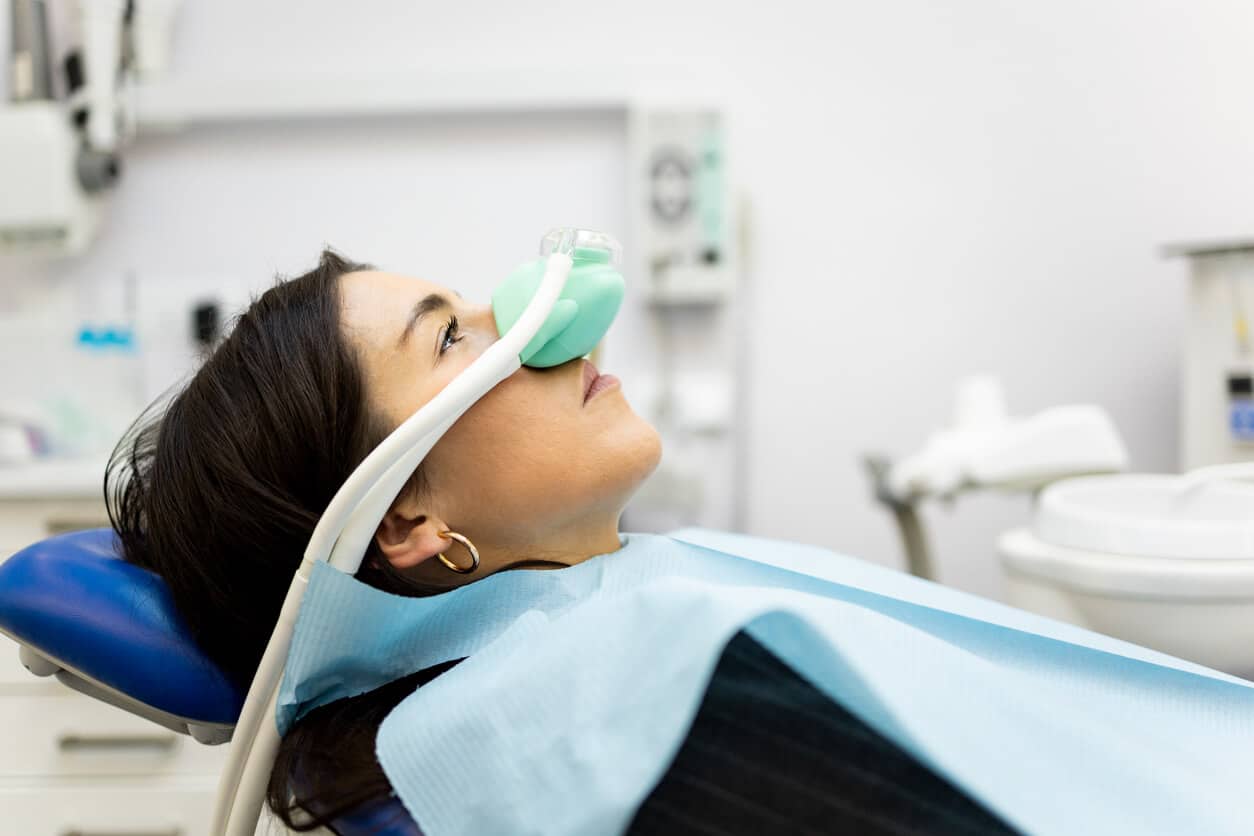
- Nitrous oxide (laughing gas): breathed through a small mask over the nose. It works within a few minutes, your child stays awake and can talk, and it wears off within minutes once the gas is turned off.
- Oral sedation: a liquid medicine your child drinks at the office. It takes roughly 30 to 60 minutes to work, your child becomes drowsy but usually still responds to your voice, and grogginess can last for several hours.
- IV sedation: medicine given through a small IV line. It works quickly, can be adjusted during treatment, brings deeper relaxation and usually leaves little or no memory of the visit.
- General anesthesia: your child is completely asleep, and an anesthesiologist manages their breathing. For our patients, it takes place in a hospital operating room through AdventHealth, and all treatment can be done in one visit.
How does nitrous oxide work, and which kids is it best for?
Nitrous oxide is a gas mixed with oxygen and breathed through a small mask over the nose. Within a few minutes most children feel calm, warm or a little giggly while staying awake. It suits mildly anxious kids, shorter visits and children who can keep a mask on and breathe through their nose.
The AAPD considers nitrous oxide a safe and effective way to ease anxiety in children, and because its effect fades soon after the gas stops, most kids can go back to their normal routine the same day. It does have limits. It won't calm a child who is truly terrified, it doesn't work well for a child who can't tolerate anything on the face, and a stuffy nose from a cold can make it ineffective. It also doesn't replace numbing: local anesthetic is still used for fillings and crowns. A simple way to practice at home is to play "smell the flowers," breathing in slowly through the nose with the mouth closed.
When is oral sedation a good fit?
Oral sedation suits children with moderate anxiety who need a somewhat longer visit and can still cooperate a little. Your child drinks a liquid medicine at the office and grows drowsy over 30 to 60 minutes. There's no needle, but the effect varies from child to child and can't be fine-tuned once swallowed.
Some children become relaxed and sleepy; others become only partly calm, or a bit irritable. Oral sedation is often paired with nitrous oxide for a smoother effect. Under the AAP and AAPD guideline, it still calls for a health review beforehand, fasting, continuous monitoring with a pulse oximeter and a supervised recovery until your child is close to their usual alertness. Plan to spend the rest of the day at home together.
What makes IV sedation different?
IV sedation gives medicine through a small line in the hand or arm, so it takes effect within minutes and can be adjusted throughout treatment. It brings deeper relaxation than oral sedation, and most children remember little or nothing. It suits significant anxiety, longer treatment, or kids for whom milder sedation didn't work.
Many parents worry most about the needle. Ask us how the IV will be placed for your child; we'll explain each step before the visit so there are no surprises. Because IV sedation for kids reaches a deeper level, vital signs are monitored by trained professionals the entire time, and your child wakes gradually in a calm recovery area. Appointments usually take 1.5 to 3 hours in total, including recovery. Expect grogginess for several hours afterward, soft foods for the rest of the day, and close supervision until bedtime. Most children are ready for school the next day.
When does a child need general anesthesia?
General anesthesia is usually recommended when a child needs a lot of treatment, is very young, has special healthcare needs or a medical condition, or can't get through care even with sedation. Your child is fully asleep, an anesthesiologist manages their breathing, and all treatment can be completed in a single visit.
For our patients, every case is planned at the Maitland office, and treatment takes place in a hospital operating room through AdventHealth. That setting is the reason hospital dentistry under general anesthesia works well for children who need many fillings, crowns, pulpotomies or extractions at once: instead of four or five stressful visits, there is one, and your child wakes up with the work done. Most hospital visits take 2 to 4 hours from check-in to recovery.
Some parents have read about the 2016 warning from the U.S. Food and Drug Administration (FDA) on anesthesia in young children. The FDA cautioned that repeated or lengthy use (more than 3 hours) of anesthesia and sedation drugs in children under 3 may affect brain development, while also noting that a single, relatively short procedure is unlikely to cause harm and that needed procedures should not be delayed. If your child is very young, bring this up with us; it's a fair question, and timing can be part of the plan.
How safe is sedation for children's dental work?
Sedation is very safe for healthy children when it follows the AAP and AAPD guideline: a health review beforehand, strict fasting, trained staff, continuous monitoring and a supervised recovery. Problems such as breathing that slows too much are caught early by monitoring. Your child's medical history matters, so share everything.
Fasting is the rule that matters most. An empty stomach lowers the chance of stomach contents reaching the lungs while a child is sedated. The American Society of Anesthesiologists (ASA) fasting guidance, widely used for children, sets these minimum times before sedation or anesthesia:
- Clear liquids (water, pulp-free apple juice, clear electrolyte drinks): up to 2 hours before
- Breast milk: up to 4 hours before
- Infant formula and non-human milk: up to 6 hours before
- A light meal: up to 6 hours before, and 8 hours or more after fried or fatty foods
Always follow the exact instructions your child's care team gives you, which may be stricter. If your child eats or drinks by mistake, tell us; the appointment may need to move, and that's for your child's safety. Let us know too about a cold, fever or congestion that week, snoring or sleep apnea, asthma, heart conditions and every medication or supplement. For young children riding home in a car seat, the AAP and AAPD guideline advises having a second adult in the car so one can watch the child's breathing while the other drives.
How do we help you choose the right level for your child?
Choosing sedation is a shared decision. We look at your child's age, temperament and past visits, how much treatment is needed and how long it will take, their medical history, and what you've seen work before. Usually, the right choice is the lightest level that lets your child get through care safely and calmly.
These five questions shape most of our conversations with parents:
- How has your child handled past dental or medical visits? A child who sat through a cleaning may do well with nitrous oxide; a child who couldn't get through an exam may need more support.
- How much treatment is needed? One small filling is very different from work on several teeth.
- Are there medical conditions to plan around? Asthma, heart conditions, sleep apnea, seizure disorders and developmental disabilities can all change the plan.
- What can your child tolerate? A nose mask, swallowing a liquid medicine, or having an IV placed.
- What does recovery look like for your family? Time off school or work, and a second adult for the drive home.
Sometimes the real choice is between several shorter visits with lighter sedation and one visit under general anesthesia. Neither is wrong. Our sedation and general anesthesia services cover the full range, so we can match the plan to your child instead of fitting your child to one option. You can read more about each level on our sedation dentistry for kids page.
Questions Parents Ask
Will my child remember the dental visit?
With nitrous oxide, children usually remember the visit, but as a relaxed one. With oral or IV sedation, most remember little to nothing, and under general anesthesia they remember nothing of the treatment itself.
Does insurance cover sedation for kids' dental care?
Coverage varies widely by plan and by level of sedation. General anesthesia in a hospital often involves both dental and medical benefits and may need pre-authorization. Ask us to review your benefits before treatment so there are no surprises.
Can my child go to school the next day?
After nitrous oxide, most children can return to their routine the same day. After oral sedation, IV sedation or general anesthesia, keep your child home and supervised for the rest of the day; most are back to school the next day.
Do you see families from outside Maitland?
Yes. Families come to our office from Orlando, Winter Park, Altamonte Springs and across Central Florida for pediatric sedation dentistry and general anesthesia dental care.
How do I get started?
Start with a conversation. Dr. Afsoon Elmore, DDS, focuses on sedation and general anesthesia dentistry for children and patients with special needs, and every plan begins with a visit at our Maitland office, just north of Orlando. Call (407) 629-6464 to schedule, and bring every question you have.
Ready to Take the Next Step?
Thoughtful Dental Care for Your Child Starts Here
Our team will guide you through every step — from evaluation to treatment — with clarity and care.